
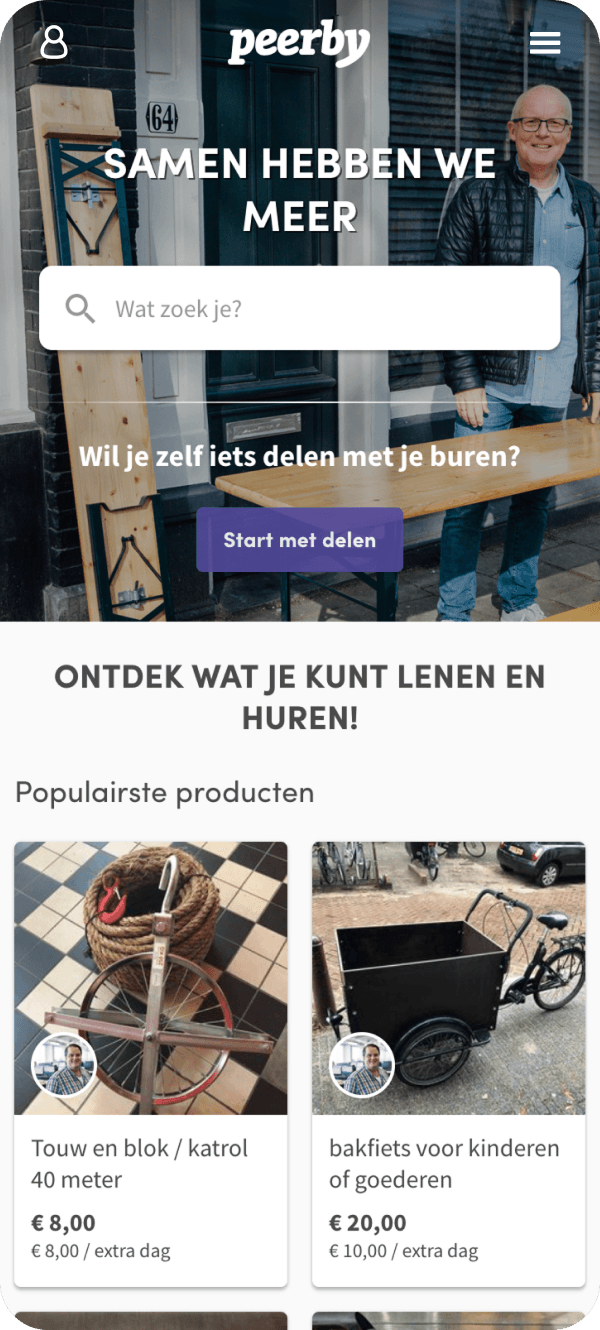
Peerby
Sharing great products with people nearby.
With over 250.000 members, Peerby is a promising peer-to-peer sharing and rental platform for durable consumer goods. Its business model combines membership with rental and insurance, resulting in an easy, secure and community-based way of sharing products with people nearby.
At Peerby, I was responsible for the creation, implementation and validation of design strategy and user experience.
Contributions / 2015 - 2017
Design for impact
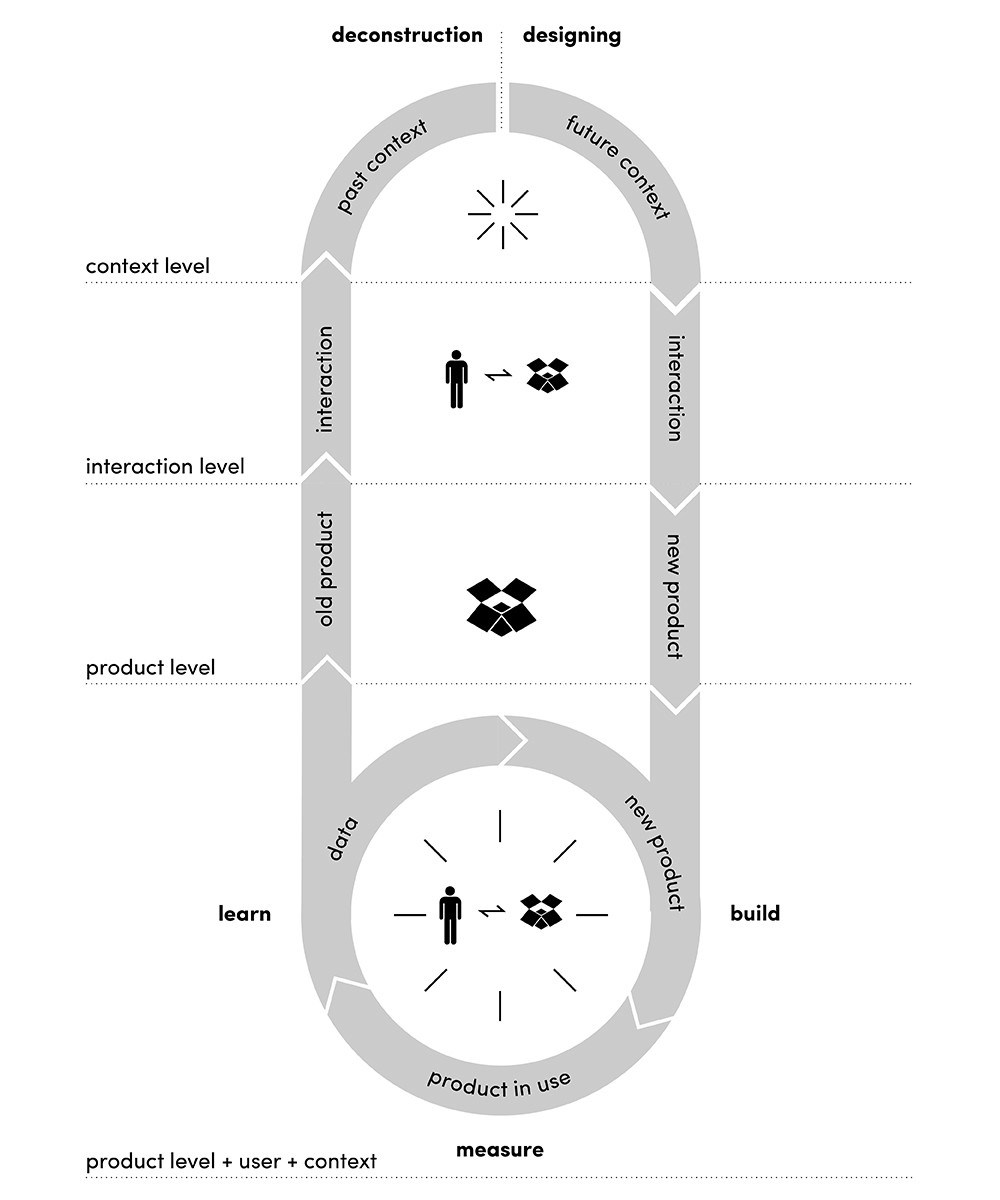
A design method that integrates vision- and learning-driven approaches.
Created for adoption
Alternating starting points drive adoption and mitigate risk
Designers enter the model at two starting points depending on the situation. When the need for direction is high and resources allow for it, they start with the vision loop. When uncertainty is high, they start with the experimental lower loop and let vision emerge from what they learn. A parallel vision + learning start is also possible, yet it's challenging to operationalise.
Once a product reached adoption, the lower loop is used to incrementally optimise it, until operational risk become proven and irrelevant, at which point the process starts again.
The core idea is that vision without learning leads to irrelevance and learning without vision lacks direction. Design for Impact balances both.
Copyright © 2026 Caesar Zwolle. All rights reserved.